
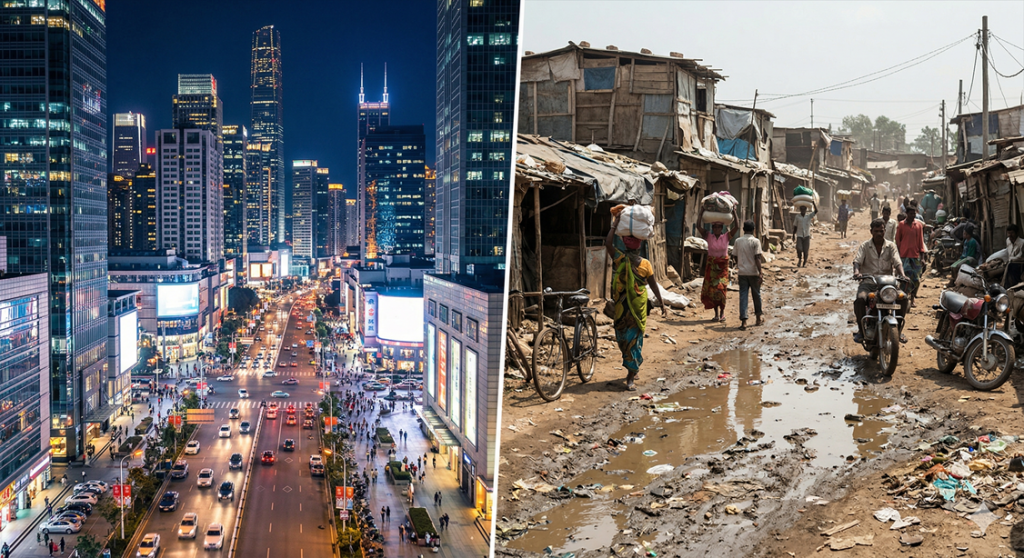
They say class is a permanent fixture of the soul. My transition from the sheltered, manicured lawns of private education to the "chaotic wilderness" of the Mexican public school system was more than a change in scenery; it was my first initiation into a world where rules are suggestions and merit is a ghost.
In that public school system, a laptop was promised to the student with the highest GPA across all groups in our specialty. As the deadline approached, I was tied for the lead with another student. However, at the ceremony, his name was called. I watched him walk across the stage to claim the glory. I wasn't upset; I genuinely assumed he had earned it. It was only later, when I reviewed the official posted grades, that the truth emerged: our scores weren’t equal. Mine was higher.
I didn’t fight the result. Not out of indifference, but of a weary recognition of the "Black Magic" of the local bureaucracy. Weeks prior, I had spent days running in circles to claim a scholarship I had already been granted. The money had been officially released from the government treasury. I was sent from office to office, building to building, met with shrugs and "it's not my department." It was a masterpiece of institutional blame-shifting.
I eventually demanded my prize in a quiet, after-ceremony exchange. I got what I deserved, but the victory felt hollow. The fact that people were willing to manipulate a system for a few hundred dollars haunted me. I grew out my beard, as a silent mourning for myself that no one else understood. I wasn't mourning a laptop; I was mourning the realization that I lived in a society where my personal capital was a liability rather than an asset.
I still remember a windy February day. The dry Mexican soil swirled in the air, sticking to the sweat on my face. I felt a profound, aching hopelessness. It felt it like a punishment for a crime I never committed: a life I didn't get to choose.
I often compare that feeling to gender dysphoria, which is the sensation of being born into the wrong body. I was born into the wrong society. I was performing a character in a play that made no sense to me, watching everyone around me find happiness in a chaos I found suffocating. At night, at least, I could close my eyes and dream of a place where things simply worked.
I eventually began to study the mechanics of prosperity. The 2024 Nobel Prize-winning research (popularized in "Why Nations Fail") mathematically proved that the answer lies in institutions. Success isn't about weather, age, or natural resources. It is about predictability. When institutions fail to be predictable, individuals are forced to become either predators or victims. Just as nations fail due to chaotic systems, an individual thrives when their internal system is solid. This is called integrity.
People of integrity don't lie, they aren't late, and they are true to their word, not because they are performing a chore, but because they understand that a functional society is a self-reinforcing circle. Integrity is the most efficient way to live.
It was many years ago, on a warm day of August that I stepped off a plane in Canada. People often ask me why I love this country so deeply. It’s simple: Canada is where my life began.
For the first time, I don't feel like a ghost in the machine. I am a person whose abilities are appreciated, whose word carries weight, and whose presence contributes to a collective growth. I am no longer dreaming of being somewhere else at night. I am home, and my only goal is to leave this society even happier and stronger than how I found it.