An old piano's true worth
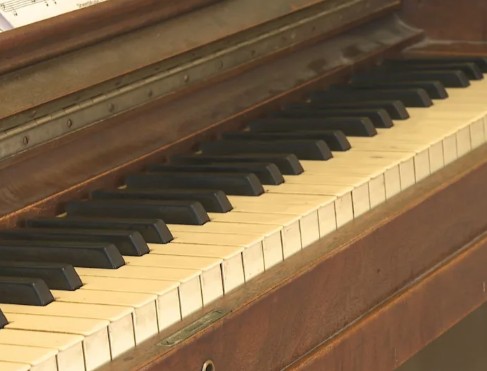
Instead, I turned my eye to the secondary market. I noticed a shocking habit among the locals: they discarded things of immense value simply because they lacked the ability to see an item's true worth. They put a tag on their items based on age and market price, rather than judging by quality and durability. Beautiful, solid-wood pieces (heirlooms, literally) tossed aside for particle board. I didn't see it as "junk removal"; I saw it as curating. I acquired a truck, hired staff, and began rescuing craftsmanship. It was environmentally noble, yes, but mostly it was satisfying to restore dignity to objects that deserved better. Items in which craftmen had invested a lot of time and efforts in their making.
But dealing with the public… well, that requires a stiff drink. One encounters the hagglers and the philistines. Among those were the people who'd refer to a piano as "furniture." Now let us be clear: A piano is not a credenza. It is a vessel for art. There is no "overlap" between the two unless you use a piano to put stuff on it. If you cannot distinguish between an instrument and a table, we have nothing to discuss.
I once sold one such upright pianos. As old as it was, which was the best proof of its durable good-quality construction, she was fully functional and one of the best instruments in my studio. I let it go for a song (a fraction of its true worth) simply to clear floor space. The buyer was a suburban father, harmless enough. The transaction was seamless.
Until it wasn't. Later that evening, I received the call. His wife. She claimed the instrument was "unplayable," "Faulty," and "useless," in her own words. There is something about a bourgeois person that makes them stand out even in the darkness. It may be their apologetic comments to excuse their choices, rather than explaining an outcome with an assertive attitude. But, being a gentleman, I agreed to return.
I brought the movers on late-hours overtime. I walked into their living room, ignoring their flustered attempts at explanation. I sat at the bench. I closed my eyes, and instantly, I was no longer in their beige suburban subdivision.
I was back in December 2008. At the recital hall. I was wearing my first bespoke suit. As humble as it was, it had been fully made for me. My parents were sitting in the front row. And they were the only two people in the world who mattered. As I struck the first F-sharp of Chopin's Waltz Op. 69, No. 2 in B minor, the silence was total.
In that stranger's living room, my fingers found the memory before they found the keys. From the F-sharp to the final B. The B minor part was as liquid as B major was. And the phrasing was neat. Didn't my fingers know when to fly up in the air and when to land on the keys. The action on the piano was crisp, both the staccato and the sostenuto pedals were responsive. The piano was not faulty but impeccable. It was a time machine that could transport anyone anywhere, just like it had transported me back to that moment of absolute perfection, where I could hear the phantom applause of my parents, and their "Bravo" as they stood up. All of it whispering from the past.
I finished the piece. The silence in the room was heavy. The wife looked down; the husband looked away. They were clearly not used to seeing a person with a heavy accent being able to play piano in casual clothes. But it was second nature to me. I stood up, smoothed my jacket, and addressed them with the calm of someone who knows exactly who they are.
"I understand that you have reconsidered your purchase," I said softly. "But there was no need to lie about the instrument’s condition. I was raised playing on practice pianos that truly were in disrepair. I know the difference because I lived through it. A piano's condition is not on the shell; it is in what you can do with it. A concert-worthy piano came through your door. And you treated it like a defective appliance because you clearly lack the education to discern quality."
I signaled my movers.
"I am delighted to take it back," I told them with a genuine smile, as I really was. "Not as a favor to you, and not because I must. I am taking it back because a flawless instrument like this deserves a home with a soul. And this is clearly not it."
The Steel Monarch: A Midnight in Laredo

I was crossing the Arizona desert solo, aiming for the Laredo-Nuevo Laredo crossing, path of the monarch butterflies during autumn. The plan was precise, but naturally, the timing went rogue. I hit Mexican customs at 9:00 PM. Now, anyone who knows anything about Mexican borders —anyone who pays attention, anyway— knows that Nuevo Laredo has a curfew. You don't wander. You find the nearest decent hotel and you wait for the sun. But Mexico has this specific kind of black magic. It loves to test you, especially when you think you have it figured out.
The customs officers held me for three agonizing hours. By the time I had repacked my truck, handling my piano with the care a relic like that deserves, it was past midnight. We won't get into the sordid details of how they operate. They claimed I owed import taxes, but their card terminal was conveniently (so conveniently) "down." They wanted cash. Honestly, the bribe wasn't expensive; it was just... distasteful. But I paid them what they wanted just to end the charade.
I rolled out of customs around 1:00 AM, the piano safe in the back, the AC humming. I didn't make it forty-five meters when I reached a checkpoint. I wasn’t shocked —again, the black magic— but I was profoundly annoyed. I rolled down my window, saying absolutely nothing, and just observed them. The aesthetics were pathetic. No uniforms. Their vehicles were clearly American junkers, "chocolates" held together by rust and, more importantly, prayers. A man approached me holding a flashlight so cheap it looked like a toy from a cereal box.
"Where are you going, Sir?" he asked.
I remained silent. I just looked at him, letting the silence hang there, with the kindness that one learns in Canada.
He stepped closer. "Don't worry. Nothing will happen to you if you follow our instructions. Pull over by the curb."
My heart hammered—a pure adrenaline explosion—but my face didn't move. I started rolling the window up without a single word.
In that split second, two things happened. First, I heard the voice of a good woman from my childhood, probably a nanny or an aunt, whispering the golden rule of Mexican survival: "Don't ever stop. Always keep moving." Second, I did the math. The survival statistics favoured running over staying. And then there’s the old joke: Trucks always have the right of way.
I was in a beast. A V8 engine, a six-inch lift, tires that cost more than their entire fleet. That’s something I learnt growing up: you treat your vehicles like an extension of your own home. You don't wait for a breakdown; you keep them fit.
The decision took exactly as long as it took for the window to seal shut. I didn't just accelerate; I floored it. I unleashed every ounce of horsepower my truck had. I even surprised myself. Three tons of steel launching forward is a feeling you don't forget.
They were surprised too. One man, who had been foolish enough to block the lane, dove out of it in pure fright. It wouldn't have been wise for him to argue physics with three tons of steel hitting 100 km/h in six seconds. They didn't even try to follow me. A pick-and-pull scrap car chasing a V8?
I like stories with happy endings, and this is one. I got home safely. I learnt that night that Mexico’s black magic is real; chaos is bigger than one can imagine, and the Federal customs agents have zero class. As for the guys at the checkpoint? I imagine their night ended in frustration, waiting hours for a prize that vanished into the dark.
But maybe, just maybe, as they watched my taillights disappear, they learnt a valuable lesson too: Don't mess with the Dominion of the True North.
The View from the Curb
I had always navigated the world with a certain nonchalance. To my peers at the time, leaving a leather backpack unattended in a common room (let alone, opened for my convenience) or a phone charging in a distant corner was an invitation to disaster. To me, it was simply a reflection of the air I breathed. I was raised in an environment where the 'daring' required to steal was as foreign as the concept of an overdraft. We didn't protect our things because we assumed, perhaps with a touch of noble naivety, that everyone else shared our baseline of abundance. Why would one covet another’s phone when the very idea of 'need' was something we only encountered in literature?
My life was a series of seamless transitions: from the comfortable chauffeur rides to the leisurely sobremesa where the afternoon melted into the evening over dessert. Time was not a commodity to be spent; it was a luxury to be savoured. I was the person who held up the line at the cashier, not out of malice, but because the concept of a 'hurry' felt fundamentally undignified.
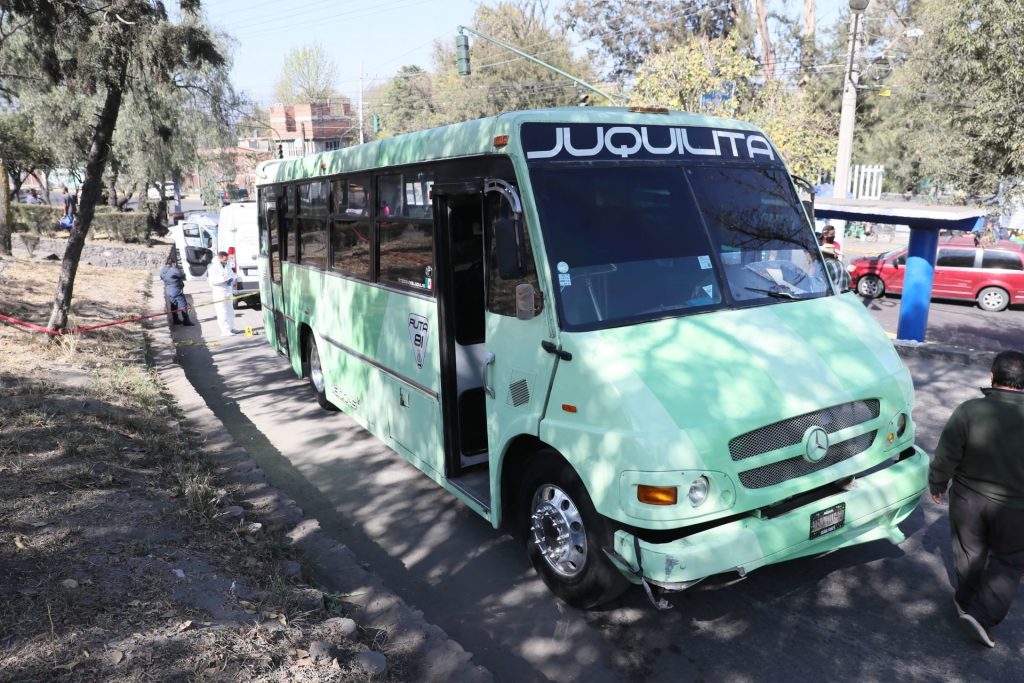
As good as my life was, my eventually futile chess move to transfer to the public technical high school in chase of my goal of a career in Engineering, shattered the peace. It was there where I encountered a peculiar, loud form of existence. Wealth, which I wad used to seeing as a tool for comfort and privacy, was being used by these new fellows as a blunt instrument for 'showing off.' We spoke the same language, but our dialects of value were irreconcilable. One day I saw a lumbering metal beast from the curb, closer than I had never been to one. It looked different from a tinted window of a sedan: the street bus.
Entering high school brought with it the social politics of joining an extracurricular sports club. Willing to blend in nicely, I decided to become a passenger of "the beast" along with my friends one day after a training session, whereas I had only been a spectator before. My ignorance was a source of great theater for my companions. I stood there, wallet in hand, asking what the fare was, and genuinely unsure if the driver would even deign to provide change for a larger banknote.
As the doors hissed shut, a cold spike of anxiety hit me: I realized I was no longer the navigator of my own destiny. In my world, a car stopped exactly where I desired. There, the bus followed its own iron-clad logic. I found myself obsessively watching the street signs, gripped by the irrational fear that the bus simply wouldn't stop where I needed it to, and that it would carry me off into some unknown horizon against my will. My friends laughed, dismissing my defense that I had taken 'long-haul' buses before. As they pointed out, a sleek coach on a highway is a parlor room on wheels; a street bus on a local route is an act of war.
We migrated to the very back, the nosebleeds of public transit. When the driver accelerated, I didn't feel the smooth, dampened surge of a high-end engine. I felt a violent, joyous leap. Each pothole was a mountain; each sudden stop was a test of gravity. What was to others a wearying commute of their daily lives was a rollercoaster to me. I found myself throwing my hands into the air, caught in the sheer novelty of the turbulence, treating a mundane Tuesday evening as if I had just gained admission to a carnival.
In the weeks that followed, I became a student of the transit system, albeit a selective one. I maintained a certain standard; if a bus arrived looking particularly weathered, I would simply step back and wait for the next one. I eventually grew accustomed to the lumbering beast, though I remained a baffled observer of the social theater within. The noise, the mess, the peculiar lack of sprawling space was a culture I could visit, but never truly inhabit.
My initiation into the "common world" became a long-running comedy for my peers, akin to the 'egg-in-powder' joke they frequently lobbed my way. At the time, I laughed along, convinced the joke was funny precisely because powdered eggs were a fictional absurdity: a culinary myth. It wasn't until five years later that I was shocked to learn that powdered eggs were a stark reality and the joke wasn't the eggs; the joke was me.
I was the boy who lived in a world where everything was fresh, slow, and private, blissfully unaware of the powdered, hurried, and crowded substitutes others lives through. I haven't become "one of the people", since I have a preference for the quiet, tinted window. But I now walk through the world with a certain clarity: I know how the bus looks inside; I know eggs can be powdered. I may not know the market price of such things, but I certainly know the value of the life that keeps me far enough away from them to only ever experience them for the sake of a good story.